Watch: Epstein-Barr Virus & Streptococcus Cofactor
Epstein-Barr Virus & Streptococcus Cofactor
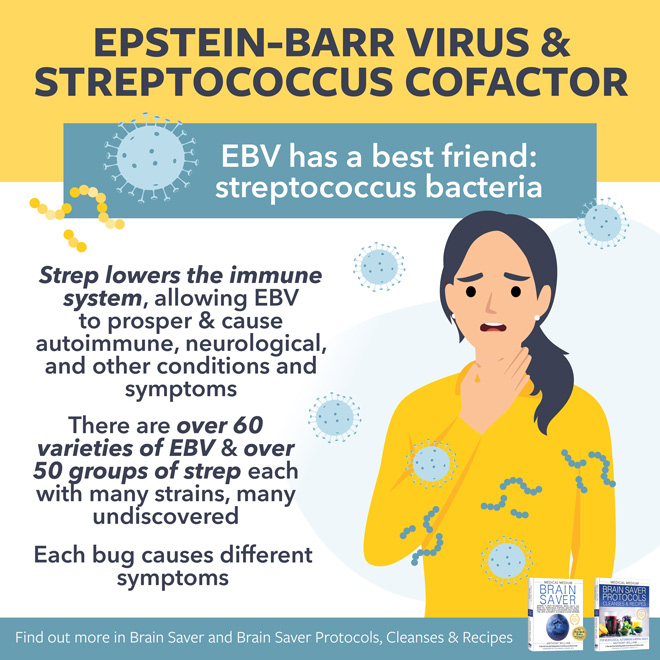
Epstein-Barr virus (EBV) has a best friend: streptococcus bacteria. Strep is EBV’s number one cofactor–this virus and bacteria have an affiliation. They work with each other: as strep distracts and weakens the immune system, EBV can proliferate and create autoimmune, neurological, and other symptoms and conditions. Strep is an immune system complicator, weakener, and overloader.
There are over 60 varieties of EBV and over 50 groups of strep, each with many strains, many of which are undiscovered. Most people carry more than one strain of Streptococcus bacteria throughout a lifetime. Out of all the bacteria that are harmful to us, strep is what people contract and live with the most. Because strep can be antibiotic-resistant, it’s becoming the new superbug. Some strains of strep can cause chronic conditions and not give in or let up, leading someone to live miserably. A person can end up collecting several varieties and strains of strep that eventually camp out in the liver, intestinal tract, and other organs.
During EBV’s Stage Two, Streptococcus can travel up to create strep throat and/or infest the sinuses, nose, mouth, or ears. It can also travel down to create infections in the urinary tract, vagina, kidneys, or bladder…eventually causing cystitis.
Strep is the cause of:
Acne
UTIs
Pneumonia
Interstitial cystitis
Chronic allergies
Chronic sinusitis
Intestinal disorders
SIBO
Otitis media
Sties
Pelvic Inflammatory Disease
Prostatitis
Sore throats
Headaches and migraines
Fatigue
Confusion
Bacterial vaginosis
Yeast infections
Bladder sensitivities
Low-grade fevers, and more.
Find out more in Brain Saver and Brain Saver Protocols, Cleanses & Recipes.
This item posted: 12-Sep-2025